Skip to content
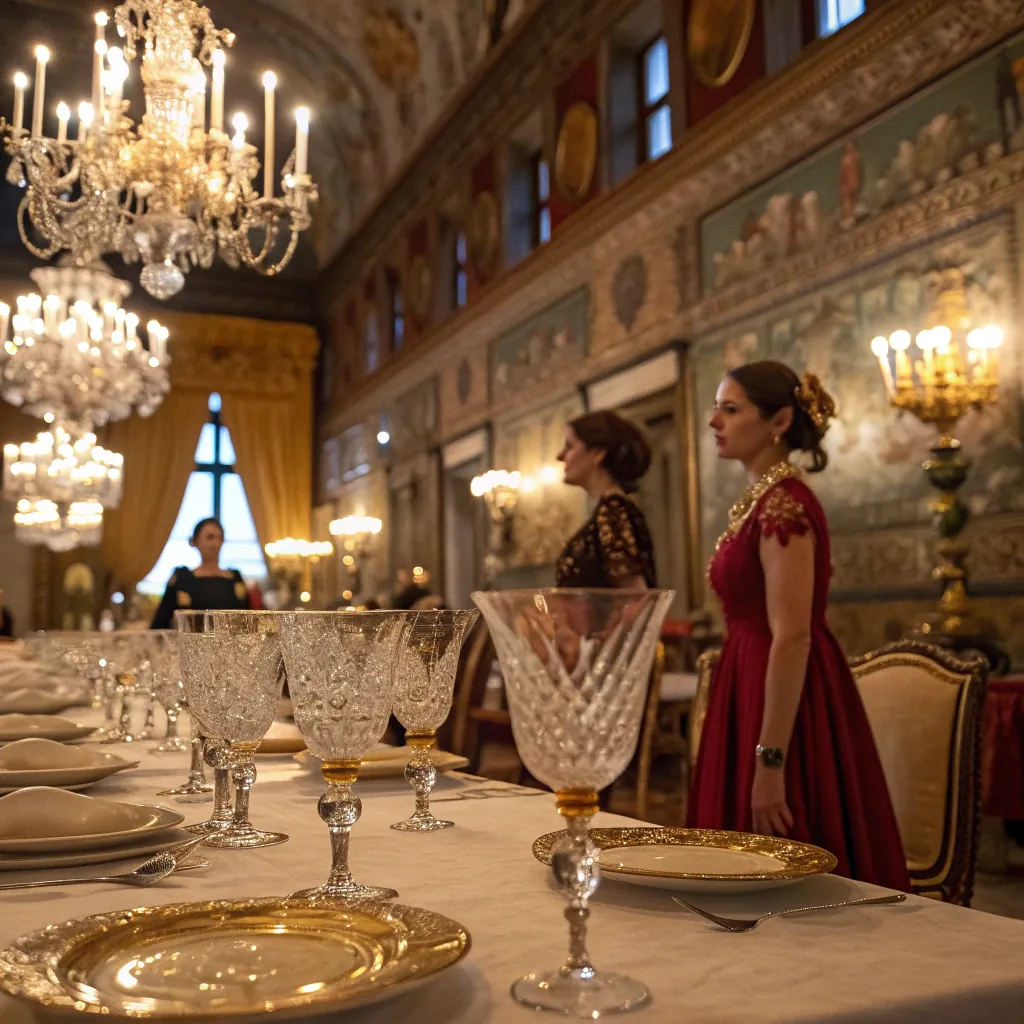
Trade routes between 1200 and 1450 were often full of risks—wars, pirates, and long distances. Yet, demand for beautiful glassware made merchants push forward across continents.
Between 1200 and 1450, glassware was traded widely across Europe, the Middle East, North Africa, and parts of Asia through land and sea trade routes. Venice played a central role in this network.
Trade followed need. Glass was light, delicate, and valued. Cities with money wanted it. Traders used trusted routes to deliver it across borders, climates, and cultures.
What were the major trade routes for glassware in the 1200s?
High demand and fragile goods created pressure. Traders had to find the best routes to move glass safely. They used old paths, built new ones, and followed peace.
In the 1200s, the major trade routes for glassware included the Silk Road, Mediterranean sea lanes, and Red Sea pathways, linking Europe with Asia, the Middle East, and North Africa.

The Silk Road was not just one route. It was a web of land paths across Asia and into Europe. Traders used it to carry silk, spices, and also glass. Venetian glass moved by sea through the Mediterranean, while other European and Middle Eastern glass pieces moved overland.
Key Land Routes
| Route | Start | End | Glass Flow |
|---|---|---|---|
| Western Silk Road | Constantinople | Baghdad | Venetian and local glass passed eastward |
| Central Asia Links | Samarkand | Kashgar | Linked Asia’s interior markets |
| Persia-India Corridor | Tabriz | Delhi | Joined glass with textiles and gems |
These paths had stations where caravans rested and exchanged goods. Glass was packed carefully with straw or cloth. It traveled with safer goods like textiles or spices.
Key Sea Routes
| Route | From | To | Glass Buyers |
|---|---|---|---|
| Venice-Acre | Venice | Acre | Levant nobles, traders |
| Alexandria-Red Sea | Egypt | Arabia, East Africa | Sultans, city merchants |
| Lisbon-North Africa | Portugal | Morocco | Local elites and traders |
Ships moved faster than camels but faced storms. To reduce risk, glassmakers created smaller, thicker pieces for export. These pieces still looked fine but were stronger.
Trade Flow Strategy
Glass flowed from producers to markets. Merchants used mixed routes—sea and land. For instance, a shipment from Venice could go by ship to Acre, then inland to Damascus or Baghdad. From there, it might join a caravan heading toward Persia or India.
Politics shaped trade. When the Mongol Empire controlled Central Asia, the Silk Road became safer. When Crusader states held Levant ports, sea trade was easier for Europeans. Each shift in power changed glass trade patterns.
Traders adapted quickly. They carried news as well as goods. A merchant arriving in Venice could hear which route was open, which city was fighting, or which port had high demand. That helped them choose the best way forward.
How did Venetian glass influence trade during 1200-1450?
Glass from Venice was not just common—it was desired. Its beauty, clarity, and skill made it more than just a vessel. It became a sign of wealth.
Venetian glass influenced trade by raising standards, shifting trade routes to Venetian ports, and creating strong demand across Europe, North Africa, and the Middle East.
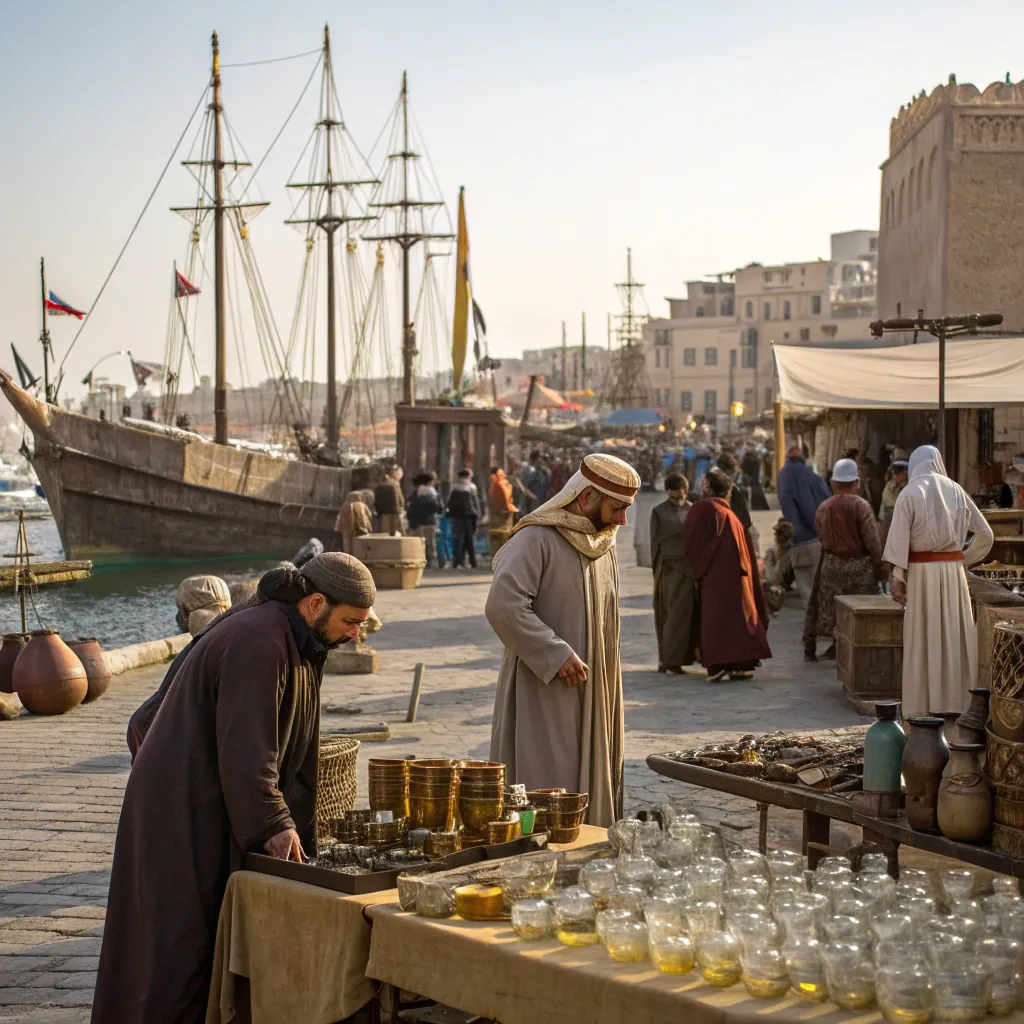
Venetian glassmakers, especially on Murano Island, created something special. They made cristallo, a clear and brilliant type of glass. They shaped it into bowls, goblets, and beads. Many were decorated with gold or painted designs.
Influence on Trade Patterns
Venetian glass changed trade. Traders started their journeys in Venice to get it. Ships full of luxury goods left Venetian ports daily.
- To the east, they moved through the Adriatic, around Greece, and into Levant ports like Acre or Alexandria.
- To the west, overland routes passed through Milan, over the Alps, and into France or Germany.
- To the north, sea routes reached England and the Low Countries.
Venice became more than a supplier—it became a hub. Traders came to Venice not just to buy, but to plan. Venetian laws protected glassmakers. Techniques were secret, and leaving the island was banned for them.
Prestige and Pricing
Venetian glass was not cheap. Buyers paid for the name and the look. Courts wanted it to impress guests. Traders used it to build trust. Even small pieces like beads could be sold for good profits.
| Product | Market | Reason for Demand |
|---|---|---|
| Goblets | France, England | Feasts, status |
| Glass beads | West Africa, India | Currency, ornaments |
| Decorative bottles | Levant, Cairo | Gifts, decoration |
Venetian glass shaped what people expected from luxury goods. Other glassmakers copied the styles. Yet the origin “Venetian” held value of its own. This kept trade strong, even during wars.
Why was the Middle East an important market for glassware?
The Middle East was not just a trade route—it was a market. Cities there had wealth, taste, and demand. Glassware fit both cultural needs and luxury trends.
The Middle East was key due to its location, wealth, and strong cultural value for glassware, especially in cities like Cairo, Baghdad, and Damascus.
Glass was not new to the region. Ancient cities like Aleppo and Alexandria had made glass for centuries. But by 1200, imported glass—especially from Venice—became a status item.
Buyers and Markets
Cities in the Middle East had different types of buyers.
| City | Buyer Type | Use of Glass |
|---|---|---|
| Cairo | Elites, mosques | Lamps, vessels, decorations |
| Baghdad | Merchants, nobles | Feasts, trade gifts |
| Damascus | Traders, artisans | Raw material, resale |
Middle Eastern traders knew what sold. They bought high-end Venetian pieces but also sold local glass back to Europe.
Cultural Role of Glass
In Islamic architecture, glass was used for light. Colored glass windows shaped mosques. Lamps in mosques were often glass, inscribed with verses.
- Light mattered: It was seen as a symbol of wisdom.
- Color mattered: Green, blue, and red glass connected with art and belief.
- Design mattered: Shape and pattern showed skill and meaning.
This made glass more than useful—it was respected.
Trade Link Power
The Middle East also acted as a link. Traders coming from India or East Africa passed through ports like Aden or Jeddah. Their goods mixed with European products, including glass.
The result: glass flowed both in and out of the Middle East. It was bought for use, for trade, or for gift-giving.
This region helped glassmakers grow. It also helped traders earn. That kept the routes alive.
Which regions were the primary buyers of Venetian glass?
Venetian glass had no single buyer. It reached kings, traders, and craftsmen. Its reach stretched from English castles to African coasts.
The main buyers of Venetian glass were elites in Western Europe, noble families in the Middle East, and merchants in North Africa who traded it inland.
Western Europe
Venetian glass filled halls and cabinets in France, England, and Germany.
- Nobles used goblets at feasts.
- Ladies wore beads as jewelry.
- Churches used glass for lamps and relic holders.
It was not just beauty. It showed money and links to power.
Middle East
Sultans in Cairo and Damascus collected fine glass. Lamps hung in mosques were ordered in bulk. Traders sold Venetian glass in city markets beside local goods.
Some glass was reused in art—cut into new forms, combined with metal, or inlaid into walls.
North Africa
Tunis and Fez were key markets. Buyers there used Venetian glass at home. Others sent it further—south into the Sahara, or west along the coast.
Traders carried beads into African trade networks. These beads often held high value, used in local markets or as gifts.
| Region | Buyer Type | Trade Method |
|---|---|---|
| Western Europe | Nobility | Land and river trade |
| Middle East | Elites, religious leaders | Sea and caravan routes |
| North Africa | Merchants, urban buyers | Coastal ships |
Venetian glass did not stay put. One item might pass through many hands. A goblet made in Murano might be used in a Cairo palace, then resold to a Moroccan trader, and later appear in a West African market.
Its path was shaped by demand, respect for the product, and the skill of those who moved it.
Conclusion
From 1200 to 1450, glassware was traded across wide regions using complex trade networks. Venice stood at the center, influencing markets with its fine glass. The Middle East, Europe, and North Africa provided eager buyers who gave glass new value through use, culture, and resale.